

Equivalent objects are different if the session in which they were last changed is different. When any process changes an object, that object is associated with a session object that includes the date and the time of change to the second. Compare Report evaluates the date and time of change. If a change to an object is made in one model, the date and time of its session object will be different than the date and time of the session object associated with the equivalent object in the other model; thus the objects will compare as different.
Under certain circumstances, objects can be reported as different when they are not actually different. For example, if identical changes to an object are made independently in each model, the date and time associated with the session object will be different and the objects will compare as different.
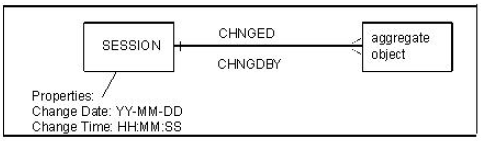
An aggregate object can be associated with many different sessions. However, it is associated with only one session at a time via the CHNGED/CHNGDBY association—namely, the session that reflects the last update to the object with respect to Version Control.
The following figure illustrates the type of association formed between a changed aggregate object and the session object:
|
Copyright © 2013 CA.
All rights reserved.
|
|