

National languages can be classified into three main groups according to the type of representation needed to store the characters on a computer.
Single Byte Character Set (SBCS):
These are languages that can be represented with a simple, single byte character set (SBCS). For example, the letter ‘A’ can be stored as hex ‘C1’; ‘B’ can be stored as hex ‘C2’. The group can be subdivided into those languages which use a Latin alphabet or an extension of it (for example, English, French, German, Italian, Swedish) and those languages which use a non-Latin character set (for example, Greek, Russian, Thai) but which still use a small alphabet in a straightforward way. In both cases, characters are always processed Left to Right (LTR) and there are no significant differences from English in how characters are processed in general. When you translate into these languages, you need only the alternative character sets that the hardware provides.
Bi-directional SBCS languages:
These are languages which can also be represented with a simple SBCS but for which the general direction of text is right to left, for example, Hebrew or Arabic. Numbers and Latin character phrases are still written from left to right in such languages, so rather than being simply Right to Left, the languages are bidirectional. Designing for bidirectional languages introduces some additional considerations that will be discussed later. Incidentally, many of the Arabic languages have a further complication still—different forms of the letter are used according to the relative position of the letter in a word. As a concept, this is just like the use of ‘f’ for ‘s’ in certain circumstances in old-fashioned English usage.
Ideographic languages:
Japanese, Chinese, and Korean require a Double Byte Character System (DBCS) implementation. DBCS languages introduce extra problems from the point of view of application design, and require a special version of the hardware and the operating system. Special considerations are discussed later on.
User Interface Design:
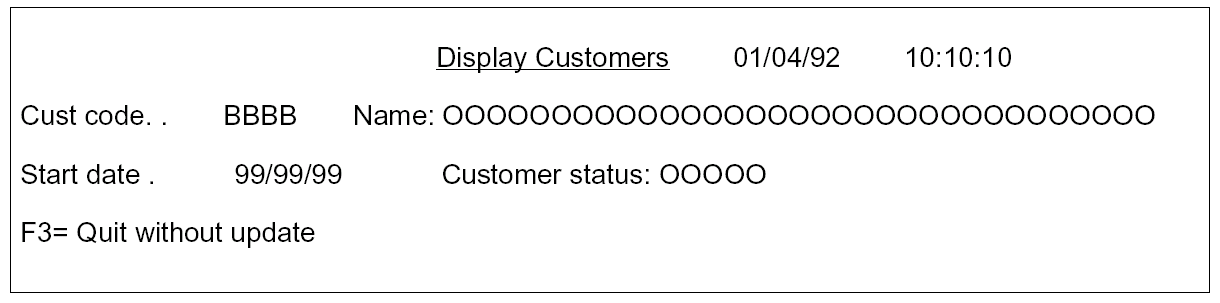
When designing displays and designs, you should leave as much space as possible to allow for translated versions of text, which may be longer than the English versions.
For example, do not do the following:
But rather:
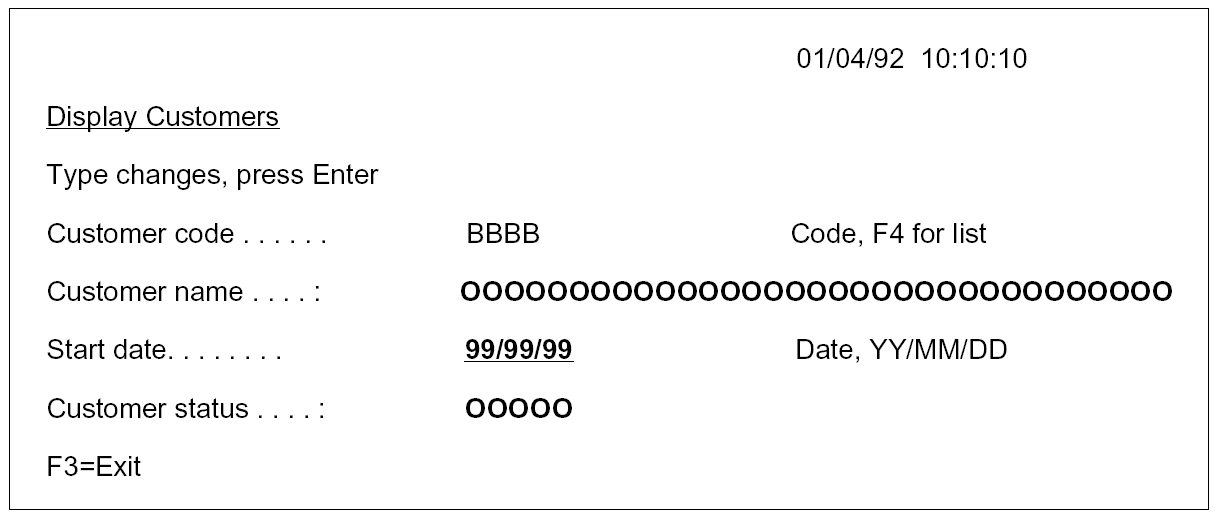
For example, do not do the following:
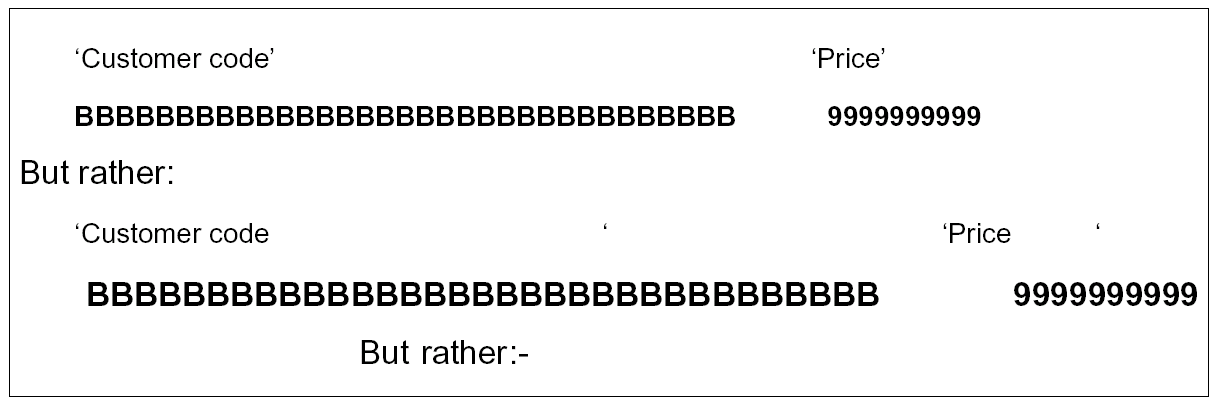
For example, do not do the following:

But rather:


|
Copyright © 2014 CA.
All rights reserved.
|
|