

Session of change comparison is an essential part of difference analysis. This section explains the concepts underlying change comparison and provides examples of the most common outcomes.
Changes occur to objects:
These changes are uploaded to the Host Encyclopedia.
Rename or delete objects using the Host Encyclopedia's Rename or Delete Object utility
Package modules or generate code or databases
An object undergo one or more changes. If an object does change, the change is associated with the session object created by the changing process-using the DIRCHGD association in the Host Encyclopedia.
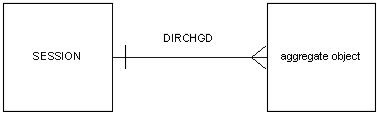
A session is an object that is used by version control to track changes. Every aggregate object is associated with a session. If the object changes again, a new session is created; the object is associated with the new session and disassociated from the old session.
Session properties include:
The change timestamp and session ID constitute a session of change that uniquely records the last change to the aggregate objects associated with the session.
An occurrence of a session object remains associated with an aggregate object until the aggregate object changes again.
In its lifetime, an aggregate object can be associated with many different sessions-but it is associated with only one session at a time using the DIRCHGD association-the session that reflects the last update to the object.
Note: Migration carries the session object from the source model to the destination model.
|
Copyright © 2013 CA Technologies.
All rights reserved.
|
|