

Deploying the appliances creates preconfigured virtual machines on your VMware ESX Server. To deploy the monitoring service, use the OVF templates that are provided in each appliance.
Note: Enter the values that are required during the deployment process, in the worksheet.
Follow these steps:
The Source page opens in the Deploy OVF Template window.
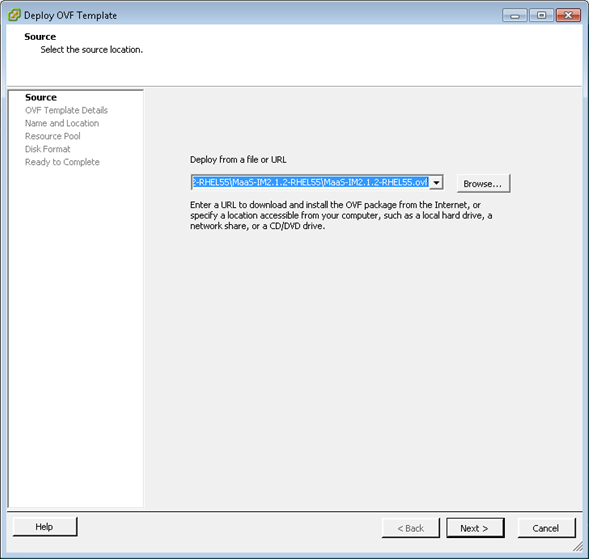
The OVF templates must be deployed in the following sequence:
Important! Install the templates in the following sequence because deployment and configuration are interdependent. We do not support any deviations from these procedures. These procedures also assume that you have the required infrastructure and non-CA Technologies software installed.
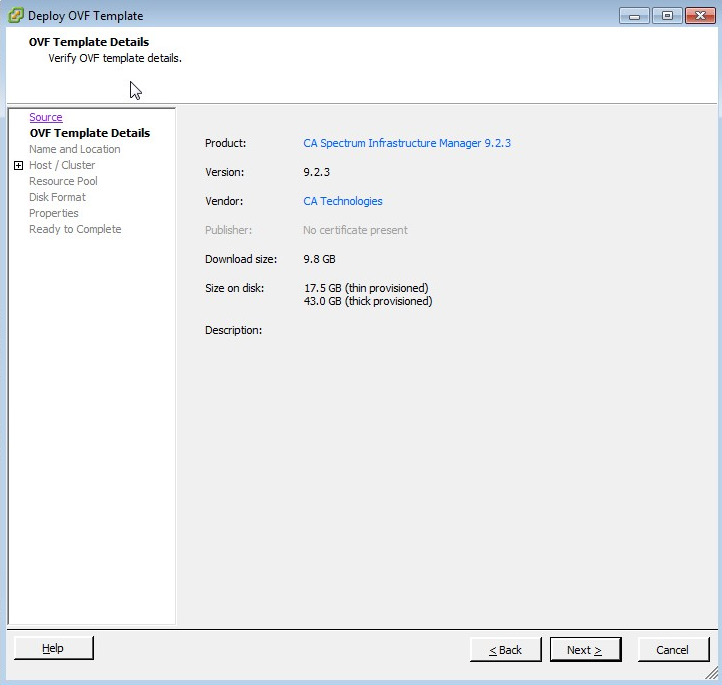
The OVF Template Details page opens with details stored in the OVF template such as the download size, available disk size, and vendor name.
The Name and Inventory Location page opens. You add a name to identify the OVF and specify the datacenter where you want to provision the server.
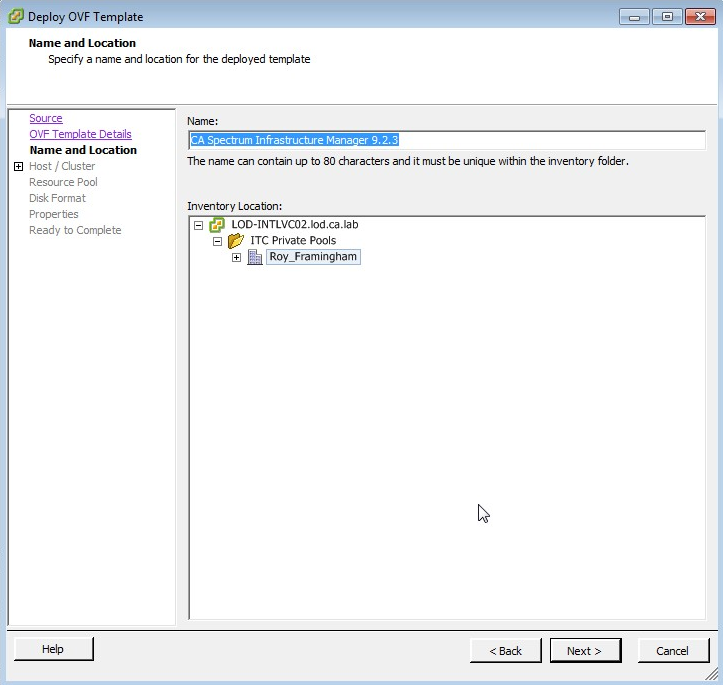
Note: By default, the name that is specified in the OVF template displays in the Name field. Retain the default name for the template.
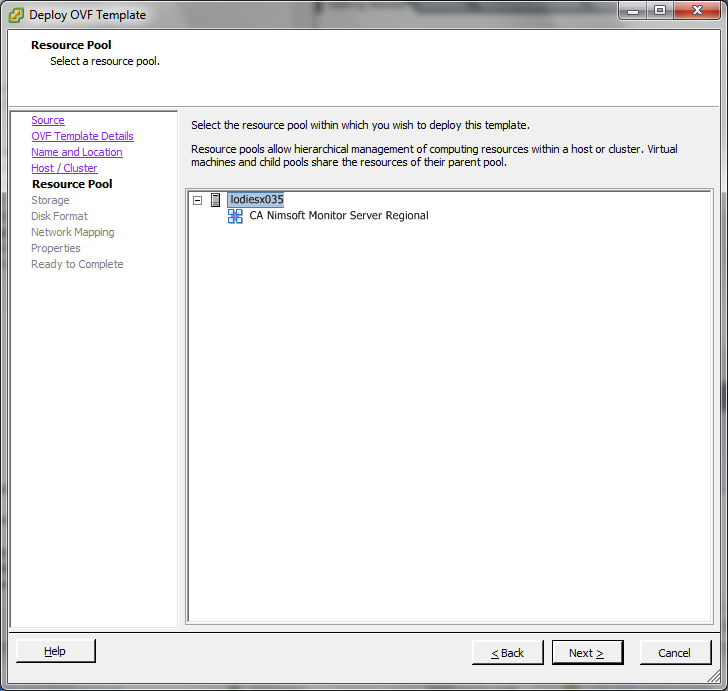
The Resource Pool page opens.
The Disk Format page opens.
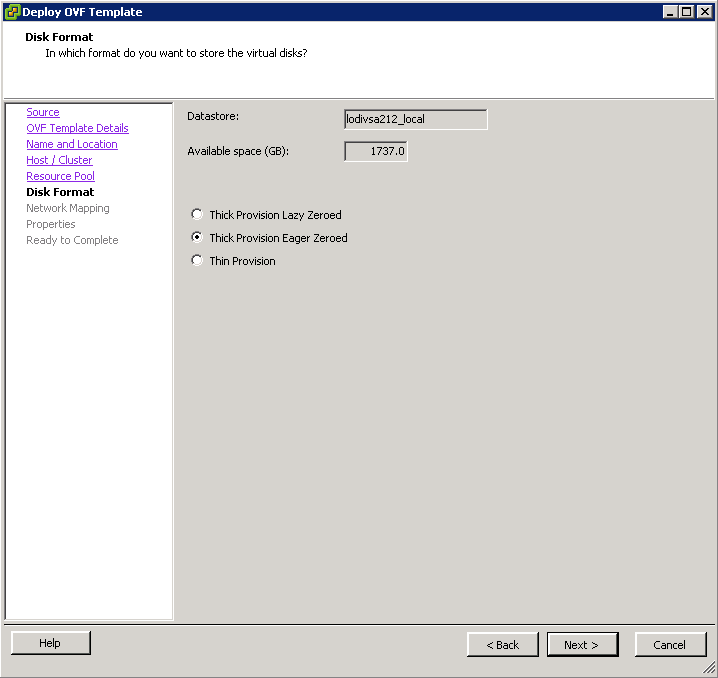
The Network Mapping page opens.
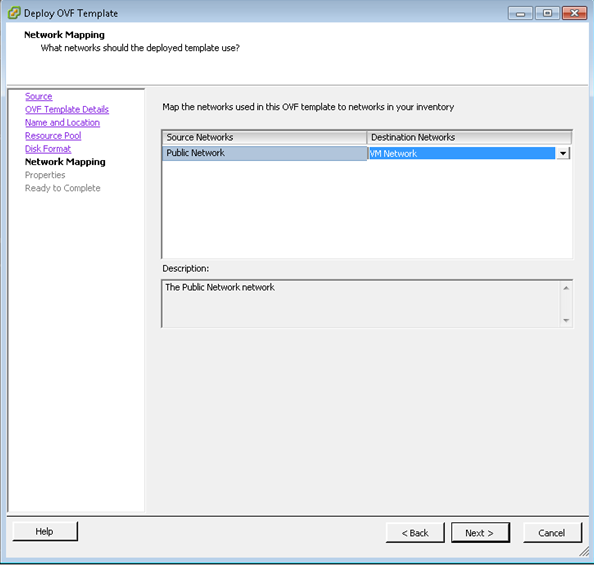
When deploying the MaaS-NMS cluster you are prompted to enter a second network. Select the private network for the NMS Servers. Your VM administrator provides the network name.
Note: For more information, see Create a Private Heartbeat Network. The Private Network must be accessible only to the NMS servers in the NMS cluster. Do not use this network for any other deployment.
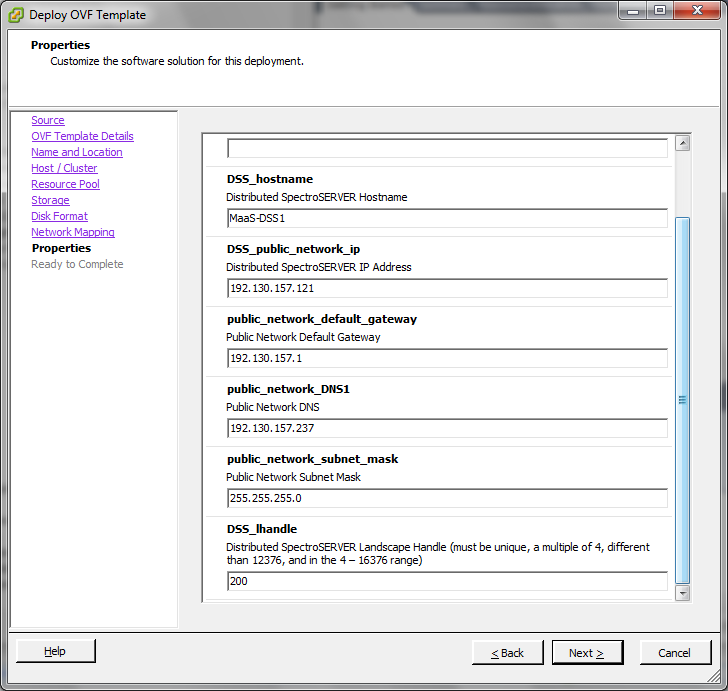
The Properties page opens to customize the software solution for this deployment. This page contains the Host settings.
Note: The mandatory field descriptions are marked in red.
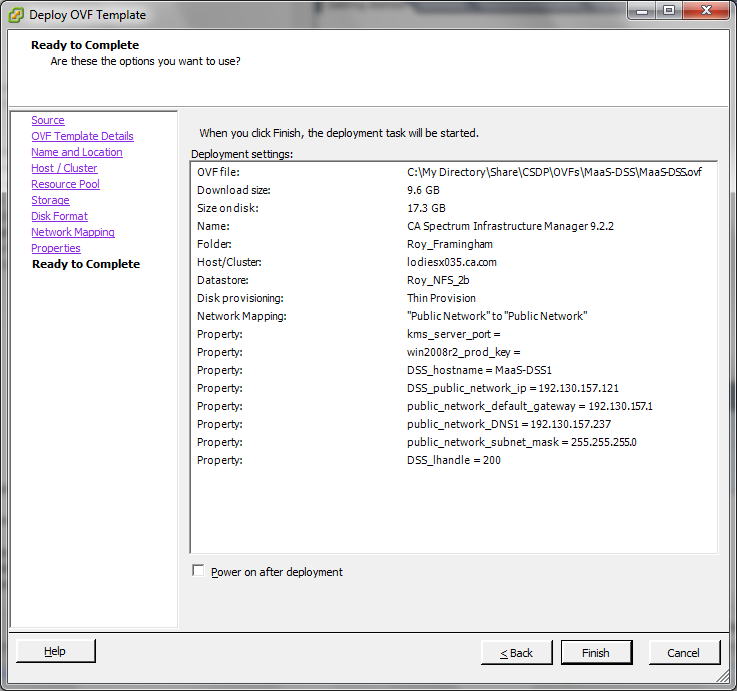
The Ready to Complete page opens and displays a summary of the details you entered in the previous pages.
Note: For more information about configuring NMS Cluster, see Configure Nimsoft Server Disks.
The deployment of monitoring service is complete.
Note: For CA CSDP to function properly, synchronize the dates, times, and time zones of your Windows appliances.
|
Copyright © 2014 CA Technologies.
All rights reserved.
|
|