

Portfolio planning is an iterative process. The portfolio manager performs the following tasks that are based on review feedback from stakeholders and others in the company:
Note: See the How to Configure the Waterline View scenario for more information about prioritizing investments in a portfolio.
When creating a portfolio, the portfolio manager initially prioritizes the list of investments using ranking rules that are based on business needs. To evaluate the portfolio, the portfolio manager creates different what-if plans and reviews the waterline views of the plans with the stakeholders. The evaluation of the portfolio uses information from all parts of the business. Based on stakeholder feedback, the portfolio manager reprioritizes the investments and reconfigures the waterline views. When the rounds of prioritization and evaluation are complete, the portfolio manager rationalizes the portfolio with stakeholders. Together they decide which investments to pursue and which ones to defer for the portfolio time horizon.
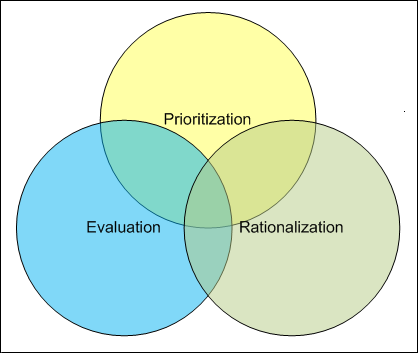
The following illustration shows how prioritization, evaluation, and rationalization overlap. For example, information that is gathered from either evaluation or rationalization can cause the prioritization of a portfolio to change.
This scenario shows how one company looks at its portfolio of investments and how it decides to thrive in the marketplace.
Example: Portfolio Planning
Raj Mehta is the new CIO for Forward Inc., a large holding company which owns many manufacturing companies. Raj reports to Lauren, the CEO who has been hired to bring a fresh perspective to the organization. Raj has worked for Forward Inc. for two years and Lauren was hired outside of the company. They have a directive from the Board of Directors to improve the company revenue stream in three years by 10 percent.
Raj and Lauren are preparing the IT budget planning for the upcoming fiscal year. In their first planning meeting, Lauren provides the following list of investments for the IT portfolio:
The list is in alphabetical order. Lauren does not indicate which projects are more important. She wants Raj to prioritize the investments using the rules that are currently in place.
To complete the portfolio planning process, Lauren and Raj must complete the following tasks:
As part of the initial portfolio creation process, as the portfolio manager, you can set up some basic criteria or ranking rules. The ranking rules dictate the order in which the investments appear on the Waterlines view.
Note: The following example assumes that corporate goals for investments have already been defined in the product.
Example: Initial Portfolio Planning
Raj uses the investments list from Lauren and creates a portfolio in CA Clarity PPM. To collect information and display it in a meaningful way, he completes the following tasks:
The following table shows the portfolio investments and other details:
|
Investment |
Duration (Months) |
Cost |
Resources |
|---|---|---|---|
|
Administrative Expense System |
3 |
250,000 |
5 |
|
Back-Office Financial System |
9 |
750,000 |
15 |
|
Cloud Based Order Intake |
3 |
100,000 |
3 |
|
Database Upgrades- Oracle |
3 |
200,000 |
6 |
|
Enterprise Time and Attendance |
5 |
450,000 |
12 |
|
Federated Security |
2 |
300,000 |
5 |
|
GUI Redesign- Supplier Internet System |
4 |
50,000 |
1 |
|
HR System Upgrade |
6 |
300,000 |
12 |
|
Interface to Material Supplier |
9 |
700,000 |
30 |
|
JIT (Just in Time) System Upgrade |
5 |
100,000 |
6 |
In the meantime, Lauren works with the board to determine the discretionary IT budget. Lauren comes back with the following inputs which Raj incorporates into the portfolio:
The following table shows the portfolio investments with the latest details:
|
Investment |
Duration (Months) |
Goals |
Cost |
Benefit |
Capital Cost |
Operating Cost |
Resources |
|---|---|---|---|---|---|---|---|
|
Administrative Expense System |
3 |
Improve Office Efficiencies |
250,000 |
20,000 |
200,000 |
50,000 |
5 |
|
Back Office Financial System |
9 |
Improve Office Efficiencies |
750,000 |
1,000,000 |
675,000 |
75,000 |
15 |
|
Cloud Based Order Intake |
3 |
Increase Sales |
100,000 |
750,000 |
|
100,000 |
3 |
|
Database Upgrades- Oracle |
3 |
Better Align Technologies |
200,000 |
100,000 |
|
200,000 |
6 |
|
Enterprise Time and Attendance |
5 |
Improve Office Efficiencies |
450,000 |
700,000 |
400,000 |
50,000 |
12 |
|
Federated Security |
2 |
Better Align Technologies |
300,000 |
3,000,000 |
275,000 |
25,000 |
5 |
|
GUI Redesign- Supplier Internet System |
4 |
Better Align Technologies |
50,000 |
60,000 |
|
50,000 |
1 |
|
HR System Upgrade |
6 |
Reduce Costs |
300,000 |
100,000 |
275,000 |
25,000 |
12 |
|
Interface to Material Supplier |
9 |
Reduce Costs |
700,000 |
2,500,000 |
600,000 |
100,000 |
30 |
|
JIT (Just in Time) System Upgrade |
5 |
Improve Office Efficiencies |
100,000 |
2,000,000 |
25,000 |
75,000 |
6 |
The portfolio manager constantly evaluates the portfolio investments to keep them aligned with the portfolio goals and within constraints. You can evaluate your portfolio investments on a periodic basis (for example, monthly or quarterly during the planning meetings). If your business needs change suddenly, you can also evaluate your investments on an ad-hoc basis. For example, if your business goals change due to new market conditions. You can reevaluate your portfolio to ensure the investments align with the new strategic direction. You can use the Balance portfolio view to call off investments that have a relatively low business alignment as compared to their completion dates.
Example: IT Budget Portfolio: Plan 1
Lauren reviews the IT Budget portfolio that Raj prepared and provides the following feedback:
Raj incorporates the feedback into the portfolio by creating a separate plan for the portfolio (Plan1). The plan is a copy of the portfolio that Raj can change to accommodate what Lauren is asking him to do. Raj brings up the plan Waterline view and drags the investments that are associated with the Reduce Cost goal to the top of the list.
The following table shows the Plan 1 version of the IT Budget portfolio:
|
Investment |
Duration (Months) |
Goals |
Cost |
Benefit |
Capital Cost |
Operating Cost |
Resources |
Cost Accumulator |
|---|---|---|---|---|---|---|---|---|
|
HR System Upgrade |
6 |
Reduce Costs |
300,000 |
100,000 |
275,000 |
25,000 |
12 |
300,000 |
|
Interface to Material Supplier |
9 |
Reduce Costs |
700,000 |
2,500,000 |
600,000 |
100,000 |
30 |
1,000,000 |
|
Cloud Based Order Intake |
3 |
Increase Sales |
100,00 |
750,000 |
|
100,000 |
3 |
1,100,000 |
|
Administrative Expense System |
3 |
Improve Office Efficiencies |
250,000 |
20,000 |
200,000 |
50,000 |
5 |
1,350,000 |
|
Back Office Financial System |
9 |
Improve Office Efficiencies |
750,000 |
1,000,000 |
675,000 |
75,000 |
15 |
2,100,000 |
|
Enterprise Time and Attendance |
5 |
Improve Office Efficiencies |
450,000 |
700,000 |
400,000 |
50,000 |
12 |
2,550,000 |
|
JIT (Just in Time) System Upgrade |
5 |
Improve Office Efficiencies |
100,000 |
2,000,000 |
25,000 |
75,000 |
6 |
2,650,000 |
|
Database Upgrades- Oracle |
3 |
Better Align Technologies |
200,000 |
100,000 |
|
200,000 |
6 |
2,850,000 |
|
Federated Security ` |
2 |
Better Align Technologies |
300,000 |
3,000,000 |
275,000 |
25,000 |
5 |
3,150,000 |
|
GUI Redesign- Supplier Internet System |
4 |
Better Align Technologies |
50,000 |
60,000 |
|
50,000 |
1 |
3,200,000 |
Lauren reviews the Plan 1 waterline view with Raj. She comments that the investments must be prioritized by Better Aligned Technologies as a top priority goal. Raj drags the investments with the Better Aligned Technologies goal to the top of the Waterline view. Plan 1 waterline view now looks like the following table:
|
Investment |
Duration (Months) |
Goals |
Cost |
Benefit |
Capital Cost |
Operating Cost |
Resources |
Cost Accumulator |
|---|---|---|---|---|---|---|---|---|
|
Database Upgrades- Oracle |
3 |
Better Align Technologies |
200,000 |
100,000.00 |
|
200,000 |
6 |
200,000 |
|
Federated Security |
2 |
Better Align Technologies |
300,000 |
3,000,000 |
275,000 |
25,000 |
5 |
500,000 |
|
GUI Redesign- Supplier Internet System |
4 |
Better Align Technologies |
50,000 |
60,000 |
|
50,000 |
1 |
550,000 |
|
Administrative Expense System |
3 |
Improve Office Efficiencies |
250,000 |
20,000 |
200,000 |
50,000 |
5 |
800,000 |
|
Back Office Financial System |
9 |
Improve Office Efficiencies |
750,000 |
1,000,000 |
675,000 |
75,000 |
15 |
1,550,000 |
|
Enterprise Time and Attendance |
5 |
Improve Office Efficiencies |
450,000 |
700,000 |
400,000 |
50,000 |
12 |
2,000,000 |
|
JIT (Just in Time) System Upgrade |
5 |
Improve Office Efficiencies |
100,000 |
2,000,000 |
25,000 |
75,000 |
6 |
2,100,000 |
|
Cloud Based Order Intake |
3 |
Increase Sales |
100,000 |
750,000 |
|
100,000 |
3 |
2,200,000 |
|
HR System Upgrade |
6 |
Reduce Costs |
300,000 |
100,000 |
275,000 |
25,000 |
12 |
2,500,000 |
|
Interface to Material Supplier |
9 |
Reduce Costs |
700,000 |
2,500,000 |
600,000 |
100,000 |
30 |
3,200,000 |
To substantiate or justify the existence of the investments in the portfolio plan, rationalize them. For example, you can link the investments to specific high priority corporate goals or business alignment factors to justify their current priority.
Example: Rationalizing Investments Based on Current Priorities
The board of directors reviews the updated portfolio plan and provides feedback. For tax purposes, the company must recognize as little expense as possible. Therefore, the higher capital dollar amount must be considered. To incorporate this feedback, Raj creates Plan 2 from Plan 1 and reworks the waterline view manually. He drags the investments with higher capital costs to the top of the list to rank them higher.
The following table shows the Plan 2 version of the portfolio:
|
Investment |
Duration (Months) |
Goals |
Cost |
Benefit |
Capital Cost |
Operating Cost |
Resources |
Cost Accumulator |
|---|---|---|---|---|---|---|---|---|
|
Back Office Financial |
9 |
Improve Office Efficiencies |
750,000 |
1,000,000 |
675,000 |
75,000 |
15 |
750,000 |
|
Interface to Material Supplier |
9 |
Reduce Costs |
700,000 |
2,500,000 |
600,000 |
100,000 |
30 |
1,450,000 |
|
Enterprise Time and Attendance |
5 |
Improve Office Efficiencies |
450,000 |
700,000 |
400,000 |
50,000 |
12 |
1,900,000 |
|
HR System Upgrade |
6 |
Reduce Costs |
300,000 |
100,000 |
275,000 |
25,000 |
12 |
2,200,000 |
|
Federated Security |
2 |
Better Align Technologies |
300,000 |
3,000,000 |
275,000 |
25,000 |
5 |
2,500,000 |
|
Administrative Expense System |
3 |
Improve Office Efficiencies |
250,000 |
20,000 |
200,000 |
50,000 |
5 |
2,750,000 |
|
JIT (Just in Time) System Upgrade |
5 |
Improve Office Efficiencies |
100,000 |
2,000,000 |
25,000 |
75,000 |
6 |
2,850,000 |
|
Cloud Based Order Intake |
3 |
Increase Sales |
100,000 |
750,000 |
|
100,000 |
3 |
2,950,000 |
|
Database Upgrades- Oracle 3 |
3 |
Better Align Technologies |
200,000 |
100,000 |
|
200,000 |
6 |
3,150,000 |
|
GUI Redesign- Supplier Internet System |
4 |
Better Align Technologies |
50,000 |
60,000 |
|
50,000 |
1 |
3,200,000 |
After investment reviews, the board and the legal department weigh in and make the following recommendations for the plan:
Raj configures the Plan 2 waterline view to display an extra Mandatory field on the view to flag the mandatory investments. The following table shows the extra Mandatory field for the investments:
|
Investment |
Duration (Months) |
Mandatory |
Goals |
Cost |
Benefit |
Capital Cost |
Operating Cost |
Resources |
Cost Accumulator |
|---|---|---|---|---|---|---|---|---|---|
|
Federated Security |
2 |
X |
Better Align Technologies |
300,000 |
3,000,000 |
275,000 |
25,000 |
5 |
300,000 |
|
Database Upgrades- Oracle |
3 |
X |
Better Align Technologies |
200,000 |
100,000 |
|
200,000 |
6 |
500,000 |
|
Back-Office Financial System |
9 |
|
Improve Office Efficiencies |
750,000 |
1,000,000 |
675,000 |
75,000 |
15 |
1,250,000 |
|
Interface to Material Supplier |
9 |
|
Reduce Costs |
700,000 |
2,500,000 |
600,000 |
100,000 |
30 |
1,950,000 |
|
Enterprise Time and Attendance |
5 |
|
Improve Office Efficiencies |
450,000 |
700,000 |
400,000 |
50,000 |
12 |
2,400,000 |
|
HR System Upgrade 6 |
6 |
|
Reduce Costs |
300,000 |
100,000 |
275,000 |
25,000 |
12 |
2,700,000 |
|
Administrative Expense System |
3 |
|
Improve Office Efficiencies |
250,000 |
20,000 |
200,000 |
50,000 |
5 |
2,950,000 |
|
JIT (Just in Time) System Upgrade |
5 |
|
Improve Office Efficiencies |
100,000 |
2,000,000 |
25,000 |
75,000 |
6 |
3,050,000 |
|
Cloud Based Order Intake |
3 |
|
Increase Sales |
100,000 |
750,000 |
|
100,000 |
3 |
3,150,000 |
|
GUI Redesign- Supplier Internet System 4 |
4 |
|
Better Align Technologies |
50,000 |
60,000 |
|
50,000 |
1 |
3,200,000 |
After reviewing the latest investments list in the portfolio plan, Lauren makes the following observations:
Raj creates Plan 3 from Plan 2 and incorporates the feedback into the Plan 3 to come up with the final rationalized list of investments. The following table shows the final list of approved and unapproved investments that are based on the latest priorities and budget constraint of $2,600, 000. The waterline for funded investments is drawn at the JIT System Upgrade initiative where the portfolio runs out of funds.
|
Project |
Duration (Months) |
Mandatory |
Goals |
Cost |
Benefit |
Capital Cost |
Operating Cost |
Resources |
Cost Accumulator |
|---|---|---|---|---|---|---|---|---|---|
|
Federated Security |
2 |
X |
Better Align Technologies |
300,000 |
3,000,000 |
275,000 |
25,000 |
5 |
300,000 |
|
Database Upgrades- Oracle |
3 |
X |
Better Align Technologies |
200,000 |
100,000 |
|
200,000 |
6 |
500,000 |
|
Back Office Financial System |
9 |
|
Improve Office Efficiencies |
750,000 |
1,000,000 |
675,000 |
75,000 |
15 |
1,250,000 |
|
Interface to Material Supplier |
9 |
|
Reduce Costs |
700,000 |
2,500,000 |
600,000 |
100,000 |
30 |
1,950,000 |
|
Enterprise Time and Attendance |
5 |
|
Improve Office Efficiencies |
450,000 |
700,000 |
400,000 |
50,000 |
12 |
2,400,000 |
|
Cloud Based Order Intake |
3 |
|
Increase Sales |
100,000 |
750,000 |
|
100,000 |
3 |
2,500,000 |
|
JIT (Just in Time) System Upgrade |
5 |
|
Improve Office Efficiencies |
100,000 |
2,000,000 |
25,000 |
75,000 |
6 |
2,600,000 (Funding cut off) |
|
HR System Upgrade |
6 |
|
Reduce Costs |
300,000 |
100,000 |
275,000 |
25,000 |
12 |
2,900,000 |
|
Administrative Expense System |
3 |
|
Improve Office Efficiencies |
250,000 |
20,000 |
200,000 |
50,000 |
5 |
3,150,000 |
|
GUI Redesign- Supplier Internet System |
4 |
|
Better Align Technologies |
50,000 |
60,000 |
|
50,000 |
1 |
3,200,000 |
|
Copyright © 2013 CA.
All rights reserved.
|
|