

|
At a Glance |
|
|
Category |
Application |
|
User volumes |
no |
|
Min. memory |
see Resources |
|
OS |
Windows |
|
Constraints |
no |
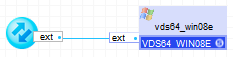
VDS_Win08S, VDS64_Win08S, VDS_Win08E, VDS64_Win08E, VDS_Win08DC, VDS64_Win08DC, VDS_Win08W, VDS64_Win08W are dedicated virtual server applications. They are designed to be deployed as standalone applications with no catalog parts.
The VDS applications provide hosting providers a quick and easy way to offer a dedicated server offering on the CA AppLogic grid. Depending on your resource needs, the applications can scale from approximately one twentieth of a physical server to a full physical server.
VDS applications include a basic build environment with GCC, if available. With these VDSs, you can install any Ubuntu package using aptitude while running as root user.
The VDS applications configure themselves through properties on first boot. The initial user is created and the root password is placed in a file, /home/<user>/su.txt. You can reset the VDS applications to their default properties by deleting /appliance/passwd.stamp from the appliance and restarting the application.
Support for Windows Server 2008 based appliances and applications are available in versions later than 2.9.1.
Note: These applications are not installed on the grid. For instructions on installing the applications, refer to the Windows Installation section of the Appliance Developer Guide.
|
Application |
Latest Version |
OS |
|
VDS_Win08S, VDS_Win08E, VDS_Win08DC, VDS_Win08W |
3.5.24 |
Windows Server 2008 Standard/Enterprise/DataCenter Edition without Hyper-V SP2 32-bit |
|
VDS_Win0864S, VDS_Win0864E, VDS_Win0864DC, VDS_Win0864W |
3.5.24 |
Windows Server 2008 Standard/Enterprise/DataCenter/Web Edition R2 64-bit |
VDS_WIN08DC
|
Resource |
Minimum |
Maximum |
Default |
|
CPU |
0.25 |
32 |
1 |
|
Memory |
512 MB |
64 GB |
2 GB |
|
Bandwidth |
1 M |
2 GB |
1 M |
VDS64_WIN08DC
|
Resource |
Minimum |
Maximum |
Default |
|
CPU |
0.25 |
32 |
1 |
|
Memory |
768 MB |
64 GB |
2 GB |
|
Bandwidth |
1 M |
2 GB |
1 M |
VDS_WIN08E
|
Resource |
Minimum |
Maximum |
Default |
|
CPU |
0.25 |
8 |
1 |
|
Memory |
512 MB |
64 GB |
2 GB |
|
Bandwidth |
1 M |
2 GB |
1 M |
VDS64_WIN08E
|
Resource |
Minimum |
Maximum |
Default |
|
CPU |
0.25 |
8 |
1 |
|
Memory |
768 MB |
64 GB |
2 GB |
|
Bandwidth |
1 M |
2 GB |
1 M |
VDS_WIN08S, VDS_WIN08W
|
Resource |
Minimum |
Maximum |
Default |
|
CPU |
0.25 |
4 |
1 |
|
Memory |
512 MB |
4 GB |
2 GB |
|
Bandwidth |
1 M |
2 GB |
1 M |
VDS64_WIN08S, VDS64_WIN08W
|
Resource |
Minimum |
Maximum |
Default |
|
CPU |
0.25 |
4 |
1 |
|
Memory |
768 MB |
32 GB |
2 GB |
|
Bandwidth |
1 M |
2 GB |
1 M |
There are no terminals.
The raw interface is enabled. You must configure the raw interface in the GUI before starting the application. These applications use the multiple external interfaces feature.
The default interface is enabled. It is used for maintenance (incoming ssh connections from the controller).
None
|
Property Name |
Type |
Description |
|
hostname |
string |
Defines the hostname to assign. Limit: 15 characters Verify the hostname and user properties are not the same value. This property is mandatory. |
|
user |
string |
Defines the user to be created on provisioning of the application. This property is mandatory |
|
user_pw |
string |
Defines the password of the user account to be created. This property is mandatory. |
|
admin_pw |
string |
Defines the password of the administrator and Cygwin root account. It is set on the first boot and written to the /home/<user>/su.txt file. This property is mandatory. |
|
dns1 |
ip_addr |
Defines the primary nameserver (v4 or v6). This property is mandatory. |
|
dns2 |
ip_addr |
Defines the secondary server (v4 or v6). Default: (empty). |
|
dns3 |
ip_addr |
Defines the third server (v4 or v6). Default: (empty). |
The VDS is used by hosting providers to offer dedicated servers using CA AppLogic without the need for any other third party software or licenses.
The VDS is distributed only as an application containing a single instance of the appliance and does not reside in any catalogs.
By way of example, provisioning the VDS can be done by running a single command that can be automated from the providers portal.
app provision VDS_WIN08W ExampleClient \
    user=Exampleuser user_pw=abcd1234 admin_pw=acbde12345 \
    primary_ip=fe80::1/64 secondary_ip=209.100.100.12 netmask=255.255.255.0 gateway=209.100.100.1 \
    ipv6_gateway=fe80::10 hostname=mydomain.com dns1=fe80::5 dns2=209.101.1.3 \
    cpu.dflt=0.50 mem.dflt=1G VDS_WIN08W.boot.size=10G
The Windows appliances are pre-built with Microsoft Windows inactivated. You must activate Windows using your Microsoft Site License Key. This ensures provisioned Windows applications have the benefits of being officially activated with Microsoft.
Once you import the Windows VDS or VDI template application, use the following procedure to activate Windows using your Microsoft Site License Key.
Follow these steps:
A prompt for a username and password displays during the last stage of the process. Windows uses the username and password to create a local user account for the configuration to complete. You will use this user account to log in to the Windows appliance and activate your site license key.
To create the Local User Account during startup, login using the graphical console.
When the application is starting, the Sysprep specialize phase is in process.
net user <username> /DELETE
vi /etc/passwd
mkpasswd -l  > /etc/passwd
sed -i -e 's/^Administrator:/root:/' /etc/passwd
rm -f /appliance/passwd.stamp
The template is now ready to be provisioned.
The following directories MUST be left intact. Any changes to any files in these directories can cause the appliance to stop working.
C:\appliance
C:\cygwin
C:\Program Files\Halsign TurboGate
Preventing vmad or vme from the c:\appliance directory from running on start will cause the appliance to stop working on next restart.
The VDS_WIN08 applications use the following open source and third party packages from Cygwin in addition to any open source and third party packages which may be installed with Windows itself.
|
Software |
Version |
Modified |
License |
|
|
alternatives |
1.3.30c-10 |
No |
GPLv2 |
|
|
ash |
20040127-5 |
No |
BSD |
|
|
base-files |
4.0-6 |
No |
Not Applicable |
|
|
base-passwd |
3.1-2 |
No |
Not Applicable |
|
|
bash |
4.1.10-4 |
No |
GPLv2 |
|
|
bzip2 |
1.0.6-2 |
No |
BSD |
|
|
libbz2 |
1-1.0.5-2 |
No |
BSD |
|
|
coreutils |
8.14-1 |
No |
GPLv2 |
|
|
cpio |
2.11-1 |
No |
GPLv2 |
|
|
crypt |
1.1-1 |
No |
GPLv2 |
|
|
curl |
7.22.0-2 |
No |
MIT |
|
|
libcurl4 |
7.22.0-2 |
No |
MIT |
|
|
cygrunsrv |
1.34-1 |
No |
GPLv2 |
|
|
cygutils |
1.4.6-1 |
No |
GPLv2 |
|
|
cygwin |
1.7.9-1 |
No |
GPLv2 |
|
|
cygwin-doc |
1.7-4 |
No |
Not Applicable |
|
|
db4 |
4.0.14-1 |
No |
BSD |
|
|
diffutils |
2.9-1 |
No |
GPLv2 |
|
|
editrights |
1.01-2 |
No |
BSD |
|
|
expat |
2.0.1-1 |
No |
Thai |
|
|
libexpat1 |
2.0.1-1 |
No |
Thai |
|
|
libexpat1-devel |
2.0.1-1 |
No |
Thai |
|
|
file |
5.09-1 |
No |
BSD |
|
|
findutils |
4.5.9-2 |
No |
GPLv3 |
|
|
gawk |
4.0.0-1 |
No |
GPLv3 |
|
|
libintl2 |
0.12.1-3 |
No |
GPLv2 |
|
|
libintl3 |
0.14.5-1 |
No |
GPLv2 |
|
|
libintl8 |
18.1.1-2 |
No |
GPLv2 |
|
|
grep |
6.3-1 |
No |
GPLv2 |
|
|
groff |
1.20.1-2 |
No |
GPLv2 |
|
|
gzip |
1.4-1 |
No |
GPLv2 |
|
|
ipcalc |
0.41-1 |
No |
GPLv2 |
|
|
less |
444-1 |
No |
GPLv2 |
|
|
libiconv2 |
1.14-2 |
No |
GPLv2 |
|
|
libssh2 |
1.2.7-1 |
No |
BSD |
|
|
links |
2.2-1 |
No |
GPLv2 |
|
|
login |
1.10-10 |
No |
BSD |
|
|
man |
1.6g-1 |
No |
GPLv2 |
|
|
minires |
1.02-1 |
No |
GPLv2 |
|
|
libncurses8 |
5.7-18 |
No |
Thai |
|
|
openssh |
5.9p1-1 |
No |
BSD |
|
|
openssl |
0.9.8r-2 |
No |
BSD |
|
|
patch |
2.5.8-9 |
No |
GPLv2 |
|
|
libpcre0 |
8.13-1 |
No |
BSD |
|
|
perl |
5.10.1-5 |
No |
Artistic |
|
|
perl-Error |
0.17016-1 |
No |
Artistic |
|
|
libpopt0 |
1.6.4-4 |
No |
Thai |
|
|
libreadline6 |
5.2.14-12 |
No |
GPLv2 |
|
|
rebase |
4.0.1-1 |
No |
GPLv2 |
|
|
rsync |
3.0.9-1 |
No |
GPLv2 |
|
|
run |
1.1.13-1 |
No |
GPLv2 |
|
|
sed |
4.2.1-1 |
No |
GPLv2 |
|
|
tar |
1.25-1 |
No |
GPLv3 |
|
|
libwrap0 |
7.6-21 |
No |
BSD |
|
|
termcap |
5.7_20091114-14 |
No |
BSD |
|
|
terminfo |
5.7_20091114-14 |
No |
MIT |
|
|
texinfo |
4.13-4 |
No |
GPLv2 |
|
|
tzcode |
2010j-1 |
No |
BSD |
|
|
unzip |
6.0-10 |
No |
BSD-Info-Zip |
|
|
vim |
7.3.003-1 |
No |
Charityware |
|
|
wget |
1.13.4-1 |
No |
GPLv3 |
|
|
which |
2.20-2 |
No |
GPLv3 |
|
|
zip |
3.0-10 |
No |
BSD-Info-Zip |
|
|
zlib |
1.2.5-1 |
No |
ZLIB |
|
|
setup |
2.738 |
No |
GPLv2 |
|
In case of application startup failure, the following errors may be logged to the system log:
|
Error Message |
Description |
|
Failed to set hostname |
VDS failed to setup appliance hostname |
|
Copyright © 2013 CA Technologies.
All rights reserved.
|
|