

The security file contains all security-related information about users, profiles, departments, divisions, zones, and resources. In this scenario, your primary security file is damaged, corrupted, or lost (indicated by error messages, performance slowdowns, or product abends). You need to perform a recovery. This scenario shows how a security administrator recovers from a security file failure.
Security file corruption can occur because of physical damage, intrusion, or an invalid command. Performing regular security file backups ensures that you can recover data. Recovery consists of reconstructing the security file with all changes that occurred since the last backup. You apply these changes from a recovery file to the backup security file.
Important! This scenario assumes that you have implemented a backup and recovery plan for your security file (including automatic backup).
The following illustration shows how a security administrator recovers from a security file failure:
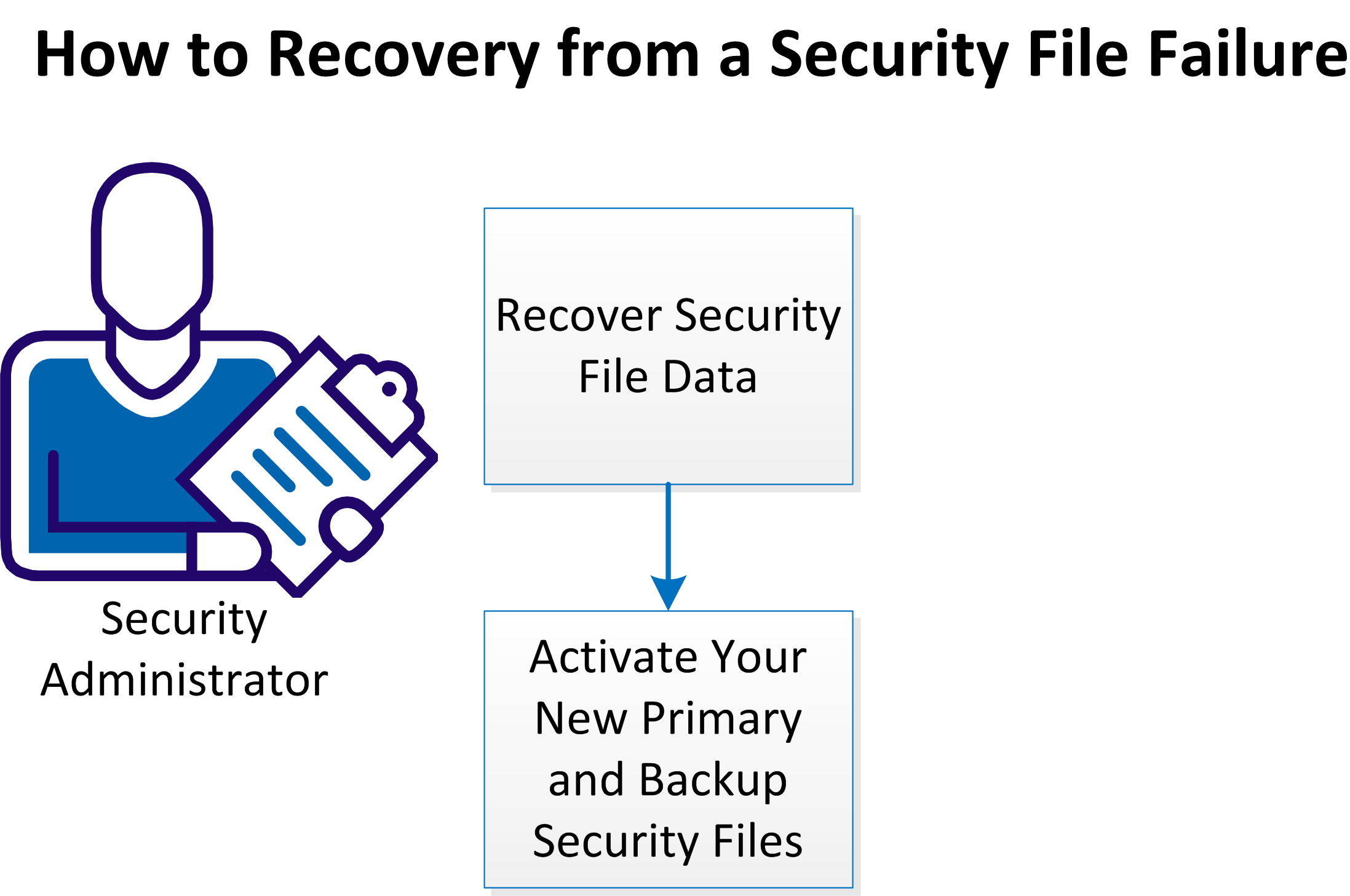
Perform the following tasks to recover from a security file failure:
|
Copyright © 2014 CA Technologies.
All rights reserved.
|
|