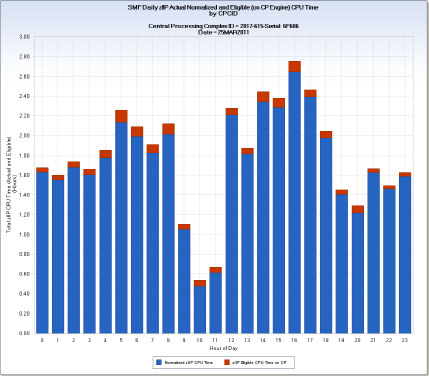
The SMFDZI query charts the hourly actual zIIP engine use per day, and eligible use, for both the Central Processing Complex (CPC) and the z/OS LPARs. In addition, the query shows zIIP engine actual and eligible use by address space type (batch, TSO, started tasks, and so on).
The examples show CPC level zIIP engine demand for an IBM z/196 2817-615.
The first chart shows the total hourly zIIP engine CPU time demand with actual zIIP engine use (blue) and eligible (red) using stacked vertical bars. The peak zIIP engine demand occurred during hour 16. At that hour, 2.65 hours of normalized zIIP engine CPU time were used, and 0.11 hours of CP engine time was used to execute zIIP eligible work. The normalization of zIIP CPU time is important for this CPC model because the CP engines run slower than the specialty (zIIP/zIIP) engines. When zIIP or zIIP CPU time is normalized, the value is expressed as the CP engine equivalent by multiplying by a normalization factor. For the 2817-615 CPC model, the normalization factor is 1.52734.
The second chart shows the actual zIIP CPU time use, broken down by address space type. Most zIIP engine demand on the CPC shown came from started task address spaces (dark blue), with TSO sessions (cyan), batch (red), and USS workloads (green) accounting for the additional demand. The second Q&R view for the address space type chart would show the breakdown for the eligible zIIP CPU time that executed on CP engines.
This query is used to determine if the zIIP engines in a CPC are sufficient to handle the zIIP eligible workload running on z/OS LPARs. The query also shows you what address space types in your workload mix execute zIIP engine eligible code. Even if no zIIP engines are present in a CPC, the charts show z/OS LPAR zIIP eligible work that executed on CP engines. zIIP engines are less expensive that CP engines. Reducing CP engines in a CPC can reduce software licensing fees. In general, if significant zIIP eligible work is executing on CP engines, it is cost effective to add zIIP engines to the CPC.
Note: The sample charts were generated for a CPC that is configured with several zIIP engines, no zAAP engines, and has ZIIPZIIP=YES specified in SYS1.PARMLIB, With this configuration, zIIP engines process all specialty engine work—including work that would normally run on zAAP engines. In this environment, the operating system treats both zIIP and zAAP eligible workloads as zIIP eligible. No zAAP actual or eligible information is recorded in SMF and RMF workload activity records. Therefore, some portion of the zIIP actual and eligible demand shown in the sample charts may be associated with zAAP eligible workloads.
SMF Daily zIIP CPU Use and Demand Adrtyp
VIEW 1 – SMF Daily Actual Normalized zIIP CPU Time Used
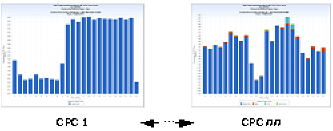
PGMSPNTM – Normalized zIIP CPU Time
HOUR – Hour of Day
VIEW 2 – SMF Daily Eligible zIIP CPU Time Executed on CP Engines
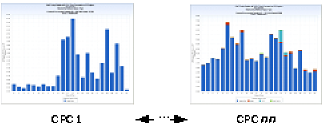
PGMSACTM – zIIP Eligible CPU Time on a CP
HOUR – Hour of Day
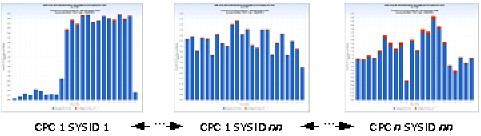
Note: The two chart thumbnails for VIEW 2 are associated with the thumbnails for VIEW 1. While the zIIP Eligible CPU Time on a CP values are much smaller than those values shown in VIEW 1, the vertical bar heights are similar because the Y-axis scale used for VIEW 1 shows hours of CPU time and VIEW 2 shows minutes.
SMF Daily zIIP CPU Use and Demand CPCID
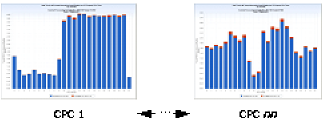
PGMZPNTM – Normalized zIIP CPU Time
PGMZACTM – zIIP Eligible CPU Time on a CP
HOUR – Hour of Day
SMF Daily zIIP CPU Use and Demand SYSID
TRIM(LPCMOD)||'-'||TRIM(CPCMODID)||'-Serial: '||SUBSTR(CPCSEQNB,12,5);
DATEPART(ENDTS) ;
IF PGMTYPE=1 THEN ADDRTYP='Batch' ;
ELSE IF PGMTYPE=2 THEN ADDRTYP='TSO' ;
ELSE IF PGMTYPE=3 THEN ADDRTYP='Started Task' ;
ELSE IF PGMTYPE=4 THEN ADDRTYP='APPC' ;
ELSE IF PGMTYPE=5 THEN ADDRTYP='Unix SysSrv' ;
ELSE IF PGMTYPE=6 THEN ADDRTYP='System Addr' ;
ELSE ADDRTYP= 'UNKNOWN' ;
The following modifications can be made to the SMFDZI query:
Note: The query step shows a red X next to the Key Selection task of the Concatenation step. You can ignore the validation error—keys are not required because the six temporary files are not interleaved.
| Copyright © 2011 CA. All rights reserved. | Email CA Technologies about this topic |