

Reducing Warmstart Time
You can reduce the time it takes to warmstart a central version following an abnormal termination by specifying a non-zero value for a JOURNAL FRAGMENT INTERVAL in the system generation SYSTEM statement or in a DCMT VARY JOURNAL command.
How the Journal Fragment Works
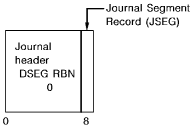
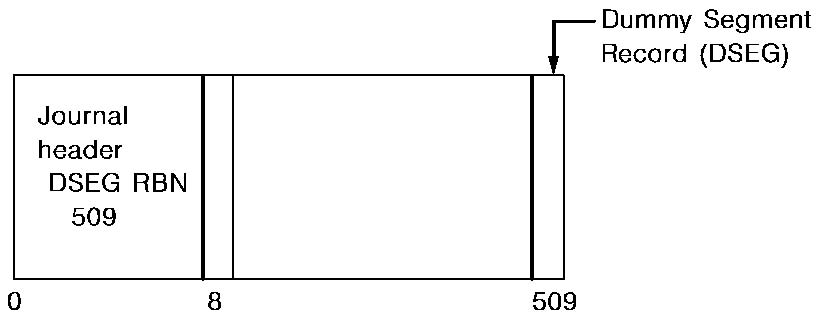
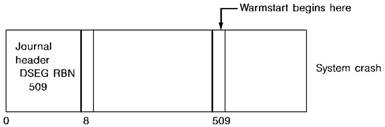
The journal fragment interval designates an interval for writing dummy segment (DSEG) records to the journal file. DC/UCF uses the DSEG records in the event of a system crash to determine the appropriate starting place for warmstart processing, as shown in the following steps:
Considerations
If your journal files are large (in terms of the number of pages), a journal fragment interval can significantly reduce the amount of time it takes to warmstart a DC/UCF system. The warmstart logic goes to the most recently accessed journal fragment and starts its recovery processing from that point. However, because there is overhead required to write dummy segment headers, your journal fragment interval should be at least 100. Choose an interval that is between 100 and half the number of blocks in your journal file.
|
Copyright © 2014 CA.
All rights reserved.
|
|