

When a record is found in more than one set, CA IDMS/DB Audit places the record in the set indicated by its owner pointer, or in the set where it appears closest to the owner record. For example, in Figure 2.42, when walking from owner record ENGLISH, member records John Doe, Joan Brown, James Jones, and Paul Cary are retrieved before an error is detected. Walking from owner record MATH, member records David Kraft, James Jones, and Paul Cary are retrieved. Record occurrences James Jones and Paul Cary appear in both sets.
If such a record has an owner pointer that matches the db-key of an owner record, the member record is placed in that owner's set.
If the record does not have a valid owner pointer, the record is placed in the set where it is nearest the owner record. In Figure 2.42, James Jones and Paul Cary are closest to the MATH record (that is, they are the 2nd and 3rd records in the MATH set as opposed to 3rd and 4th records in the ENGLISH set). Figure 2.43 shows how the sets will be fixed by CA IDMS/DB Audit, by placing James Jones and Paul Cary in the MATH set.
If a record does not have a valid owner pointer and it is equidistant from multiple owner records, it is placed in the set whose owner has the lowest db-key.
The fixed sets are unbroken, but either James Jones or Paul Cary, or both, may belong in the ENGLISH set. You should verify the logical integrity of the sets by examining the After Image Report to see how the error is corrected by CA IDMS/DB Audit.
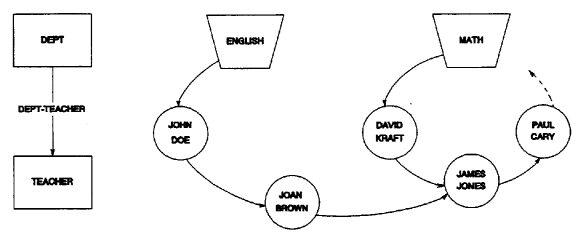
Figure 2.42: Records with Multiple Owners (Before Fix)
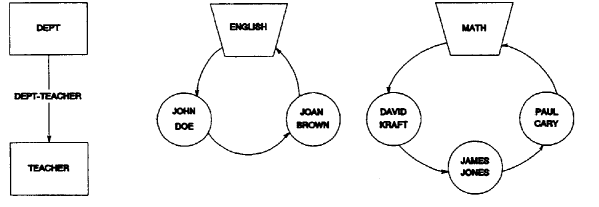
Figure 2.43: Records with Multiple Owners (After Fix)
|
Copyright © 2013 CA.
All rights reserved.
|
|