

The three relational operations (select, project, and join) can be used to define and access data tables.
Select
Select enables you to choose the rows to be included in a table.
┌----------------------------------┐
│           SALESPERSON            │
├-------------------┬--------------┤           ┌------------------------------┐
│ SALESPERSON       │ HOME OFFICE  │           │    SALESPERSON IN MUNCIE     │
├-------------------┼--------------┤           ├---------------┬--------------┤
│ Robyn Akert       │ Muncie       ├----┐      │ SALESPERSON   │ HOME OFFICE  │
│ Timothy Benson    │ St. Louis    │    │      ├---------------┼--------------┤
│ David Emmons      │ Austin       │    ├-----►│ Robyn Akert   │ Muncie       │
│ Bob Hogan         │ Phoenix      │    │      │ Dan Strauch   │ Muncie       │
│ Dan Strauch       │ Muncie       ├----┘      └---------------┴--------------┘
│ Rebecca Zonderman │ Phoenix      │
└-------------------┴--------------┘
Project
Project enables you to choose the columns for a table.
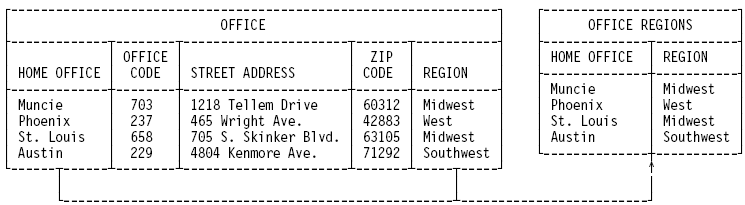
Join
Join enables you to combine two or more tables on the basis of a common column. The tables below are joined using the HOME OFFICE column.
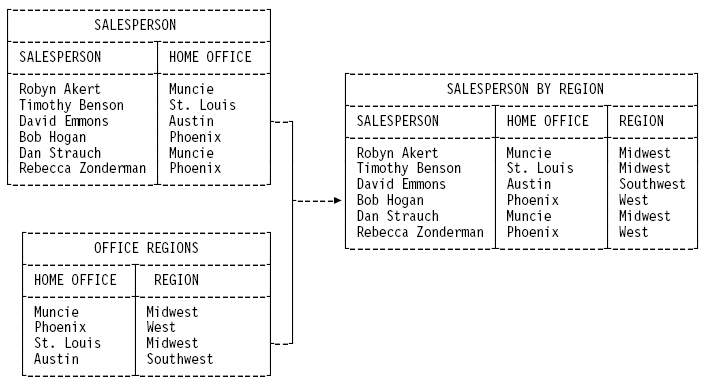
Perform Relational Operations with ASF
ASF enables you to perform relational operations easily in various combinations. You can join several tables, project the required columns, and specify detailed criteria for selecting rows of data. Use of the relational operations in ASF is discussed in .
|
Copyright © 2014 CA.
All rights reserved.
|
|