

The names CLIENT NUMBER and CLIENT NUM on the following figure suggest they can be different names for the same attribute, especially in light of the same parent entity name. The following is a sample view:
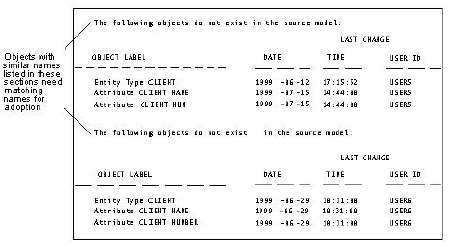
The source model can adopt an attribute in the destination model only if the source model contains an attribute with the same name as the selected attribute and if the parent entity types of these two attributes have common ancestry. If the parent entity types do not have common ancestry, this adoption requirement can be met by adopting the entity types in the same adoption session.
The adoption rules for entity types and attributes are discussed in the following table:
|
Selected Object |
Adoption Rule is Adopted If: |
|---|---|
|
ENTITY TYPE |
Source model contains Entity Type with same name |
|
ATTRIBUTE |
Source model contains Attribute with same name |
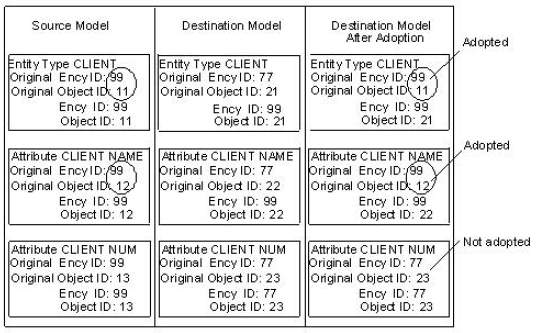
The adoption of Attribute CLIENT NAME and the adoption of Attribute CLIENT NUM depend on the following three things:
Note: CLIENT NUM does not appear in the source model.
The following figure illustrates that Adoption would replace the Original Encyclopedia ID and Original Object ID of Entity Type CLIENT and Attribute CLIENT NAME, but would not replace IDs (adopt) of CLIENT NUM because it does not conform to the Adoption Rule for attributes.
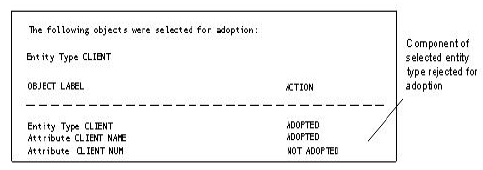
The following figure illustrates how Trial Adoption would report the action on the attribute CLIENT NUM.
|
Copyright © 2013 CA.
All rights reserved.
|
|