

An application generated using a CA Gen model may contain many procedure steps. These procedure steps are the building blocks of executable applications, but they need to be combined into logical groupings for execution. Load module packaging is the process of combining the procedure steps of the application into units that can be executed. Before you can generate an application, the Construction Client requires that these units and their contents be identified.
Load module packaged units are themselves called load modules. The act of packaging does not create the load modules. Packaging simply defines the contents of a load module. A load module (or executable program) is created when the remote file is installed on the target system. An installed load module contains the executable code for all components included in its packaging definition plus CA Gen special function routines and system routines. An example is a UNIX executable.
Note: Regardless of the platform, the term Load Module is used in the Packaging process as a generic way to refer to the set application code that is contained in a fully resolved executable application. Starting with AllFusion Gen 7, applications when installed on z/OS are built as fully resolved executables that reside in DLLs, except for those application components marked for Compatibility. Components marked for Compatibility are built as z/OS non-DLL load modules. Before AllFusion Gen 7, z/OS executables reside in z/OS load modules.
Packaging of operation libraries and z/OS libraries are performed by the Toolset and is not covered in this guide.
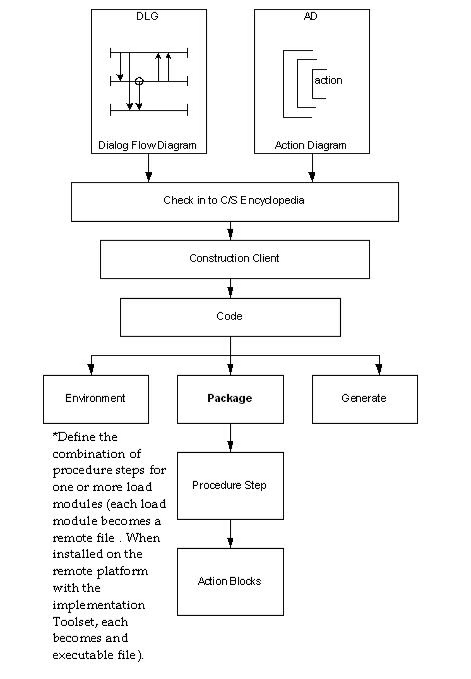
The following illustration provides an overview of the packaging process:
|
Copyright © 2013 CA.
All rights reserved.
|
|