

With each Systems Performance domain capable of supporting up to 100,000 monitored servers and workstations, there is a critical need for a mechanism that provides fast and reliable access to the vast amount of performance data that may potentially be gathered over time. In particular, it is important that the data held in performance cubes across the enterprise:
The Performance Data Grid (PDG) in CA NSM Systems Performance (r11 and above) provides all these capabilities and more. In essence, the PDG lets you obtain performance information that covers any time period and at virtually any degree of granularity for any managed element in your enterprise (device, server, application, and more).
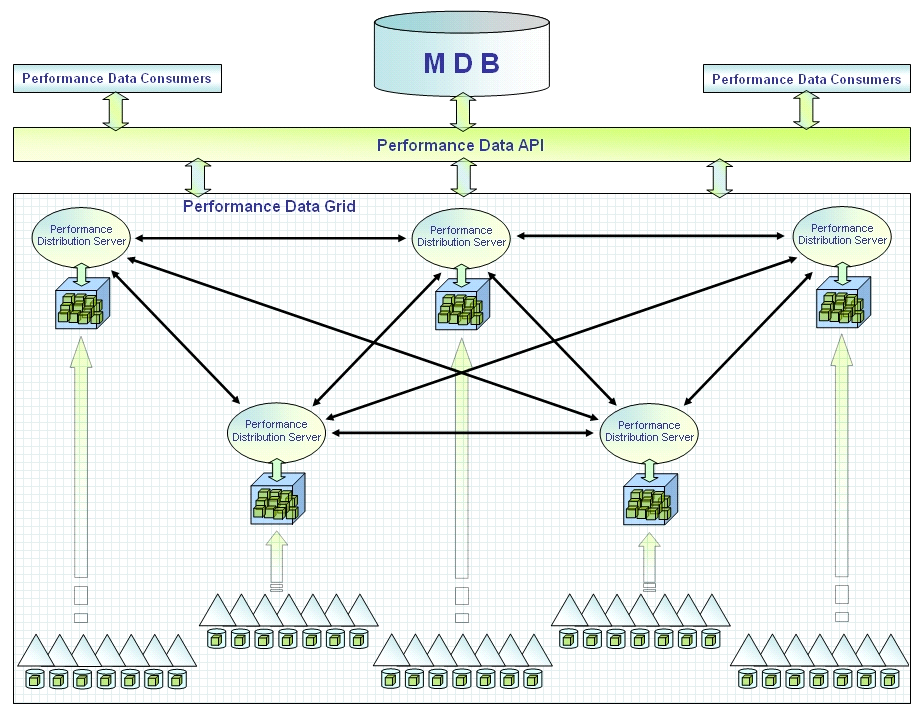
The PDG is formed from a network of orthogonal, distributed Performance Distribution Servers that form a grid to service data requests. This grid creates a single image of the performance data for the entire enterprise and grants you seamless access to the data. A notable feature of this design is that you do not need to know where the data you are requesting is physically stored, or which end-point is servicing the request; you simply place a query on the grid and obtain a response.
|
Copyright © 2010 CA.
All rights reserved.
|
|