- From the Main Menu, click Reports, Reports Folder.
The Reports Folder page opens.
- Click Add New and select Compound Report.
The Compound Report Properties page opens.
- In Name, enter a name for the Compound report.
Note: Use descriptive names for Compound reports, so that they can be easily identified in the Reports list.
- In Description, enter a description for the Compound report.
- In Chart Options:
- In Automatic Scaling, select how to scale the Y-axis on the chart from the drop-down-list.
- Select the Merge series check box to merge the data from each report into a single series.
For example, when creating a Service Level report that includes metrics from two different domain categories, you would normally need to generate two different reports. Creating a Compound report allows you to combine the information into one report. The Merge series option can then be used to display a single series of data showing the service level for all the relevant metrics.
- In Owner, select the owner of the report.
A user or user group that is the owner of a report can view the report in the list of saved reports and modify the report, if required.
Note: This drop-down list is disabled when creating a new Compound report starting from the My Reports folder
- In Permitted users, select the user who is permitted to view the Compound report from the Available list and click the arrow, or double-click the user.
The user moves to the Included list.
- In Folder, select the folder to which you want to add the Compound report from the drop-down list.
- In Reports, click Add to select the reports that comprise the group.
The Find Target Report window opens.
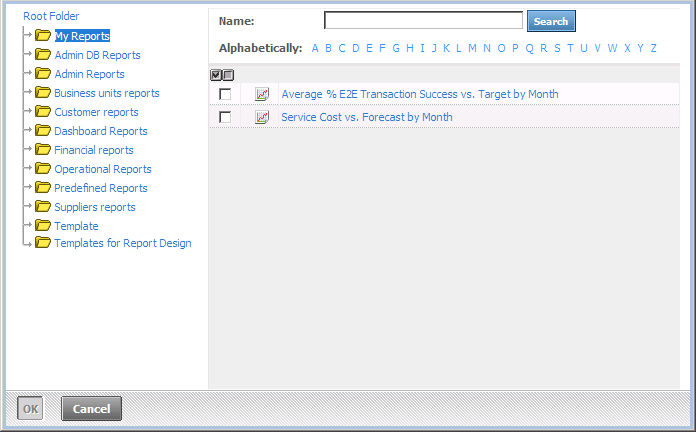
- Click on a folder and select the reports to be included in the Compound report by checking their check boxes.
Tip: Click  to select all reports in the folder or
  to clear all check boxes.
- Click OK. The reports are added and shown in the Reports list box.
- Arrange the order of the fields in the list by selecting a report and clicking the arrows. The order of reports in this list determines the order in which the reports are displayed (from left to right, or from top to bottom).
Note: You can remove a report from the Reports list box by selecting it and clicking Remove.
- In PDF Parameters, define the page setup parameters for when the report is to be exported to PDF.
- In Related reports, click Add.
The Find Target Report window opens.
- Click on a folder and select the related reports to include in the Compound report.
Tip: Click to select all reports in the folder or to clear all check boxes.
- Click OK. The reports are added and shown in the Related reports list box.
- Arrange the order of the fields in the list by selecting a related report and clicking the arrows. The order of related reports in this list determines the order in which the reports are displayed (from left to right, or from top to bottom).
Note: You can remove a related report from the Related reports list box by selecting it and clicking Remove.
- In Display in, enter the number of columns in which to display the reports.
- In Scheduling, click Edit to schedule the Report-Group report.
The Scheduling window is displayed. For more information, see Scheduling a Compound Report.
- Click Save to save the Compound report and return to the Reports Folder page.
- Click Cancel to stop the process and return to the Reports Folder page.

