

|
|
|
You can create a Sysplex or Monoplex system registry if you have Monoplexes with the same Sysplex name (for example: LOCAL). Instead of showing multiple LOCAL Sysplex entries, which would need to be expanded to select the correct Monoplex system, the CA MSM system registry shows the actual Monoplex system name at the top-level Sysplex name.
The FTP and DATA Destinations at the system level are not used when the Sysplex is a Monoplex. The only FTP Location and Data Destinations that are referenced are those defined at the Sysplex Level.
Follow these steps:
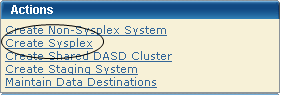
The New Sysplex dialog appears.
Note: The asterisk indicates that the field is mandatory.
Enter the Sysplex system name.
Limits: Maximum 8 characters.
Enter the description.
Limits: Maximum 255 characters.
Sysplex and Non-Sysplex system can have the same name. Use the Description field to differentiate these systems.
Note: Monoplexes are stored in the Sysplex registry tree but with the name of the Sysplex system and not the Monoplex Sysplex Name. For example, a system XX16 defined as a Monoplex, with a Sysplex name of LOCAL. It will be depicted in the system registry as a Sysplex with the name of XX16. This Sysplex contains one system: XX16.
The Sysplex System is saved, and its name appears in the Sysplexes list on the right.
Note: Click Cancel to withdraw this create request.
Note: z/OS systems running under VM are treated as being in basic mode and not LPAR mode. As result, the LPAR number is null in the z/OS control block. When this is the case, the system validation output includes the following message:
Property Name: z/OS LPAR Name, Value: ** Not Applicable **.
| Copyright © 2011 CA. All rights reserved. | Tell Technical Publications how we can improve this information |