

Managing Applications › Manage a Multi-Tiered Application › How Multi-Tiered Applications Work
How Multi-Tiered Applications Work
Consider an N-Tier SAP architecture that consists of the following tiers:
- Tier 1--Internet Explorer running on a user workstation
- Tier 2--An HTTP-based application running on Windows
- Tier 3--A database server running Oracle on UNIX
In a multi-tier application, at least one server acts as both a server and a client to other application servers. In the example above, Tier 2 is a server to user requests from Tier 1, and a client to requests from the Tier 3 server.
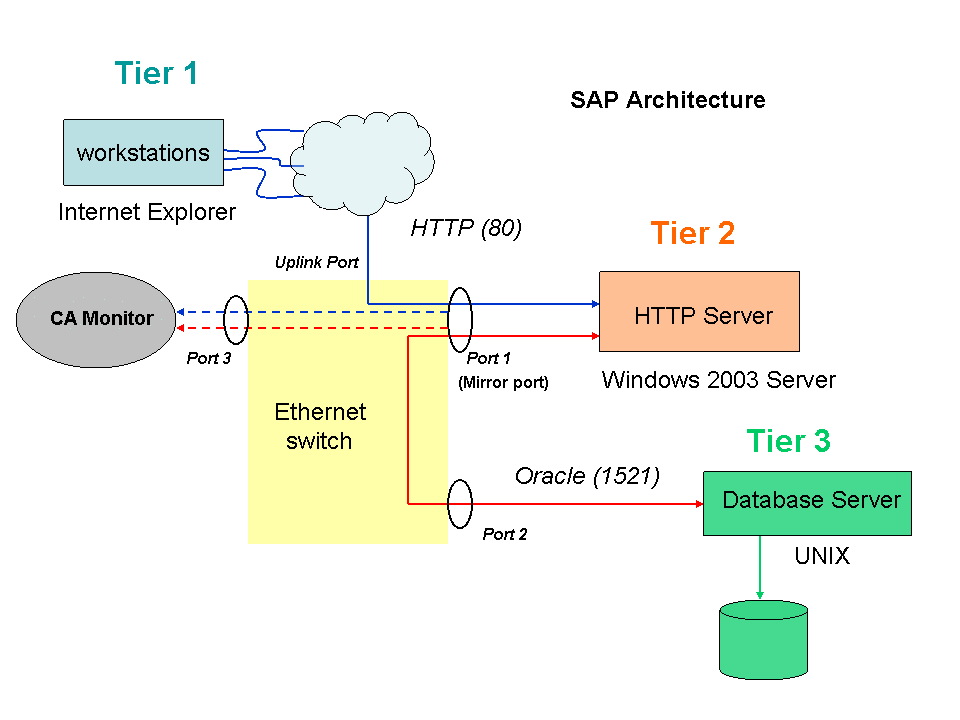
The following process occurs:
- Using Internet Explorer, a user initiates a connection to the Tier 2 HTTP server, which is illustrated by the blue line.
- After the connection is established, the user requests application data.
- The HTTP server forwards this request to the Tier 3 Oracle database server, depicted by the red line.
- The Oracle server runs the user query and returns the results to the Tier 2 HTTP server.
- The HTTP server sends the data back to the Tier 1 client.
The multiple handoffs among the application tiers can make it difficult to identify the source when a performance problem occurs with an N-Tier application. Operationally, when Tier 2 waits for the Tier 3 response, its performance depends on the Tier 3 performance.
Copyright © 2014 CA Technologies.
All rights reserved.
|
|