

The requirements of a frequent end user who uses a system are significantly different from those of a first-time end user or of an occasional end user. The expert will retain much more knowledge about how to use the system and will want highly efficient paths through normal tasks. The new end user will require more support. Therefore, you need to try to design systems to have both a ‘fast path’ and a ‘slow path’. The slow path, typically involving menus and inquiry facilities, should allow the end user to make use of inquiry facilities to reassure himself that he is doing the right thing. The fast path system should allow for as fast of a transition as possible, both through and between transactions.
The layered prompting of OS/400 provides a good example of this. For example, the OS/400 Copy file command (CPYF) can be called from a menu or entered directly. In either case, the command prompter can be used to guide the user into entering the appropriate values.
The following is an example of a Command Processing Program:
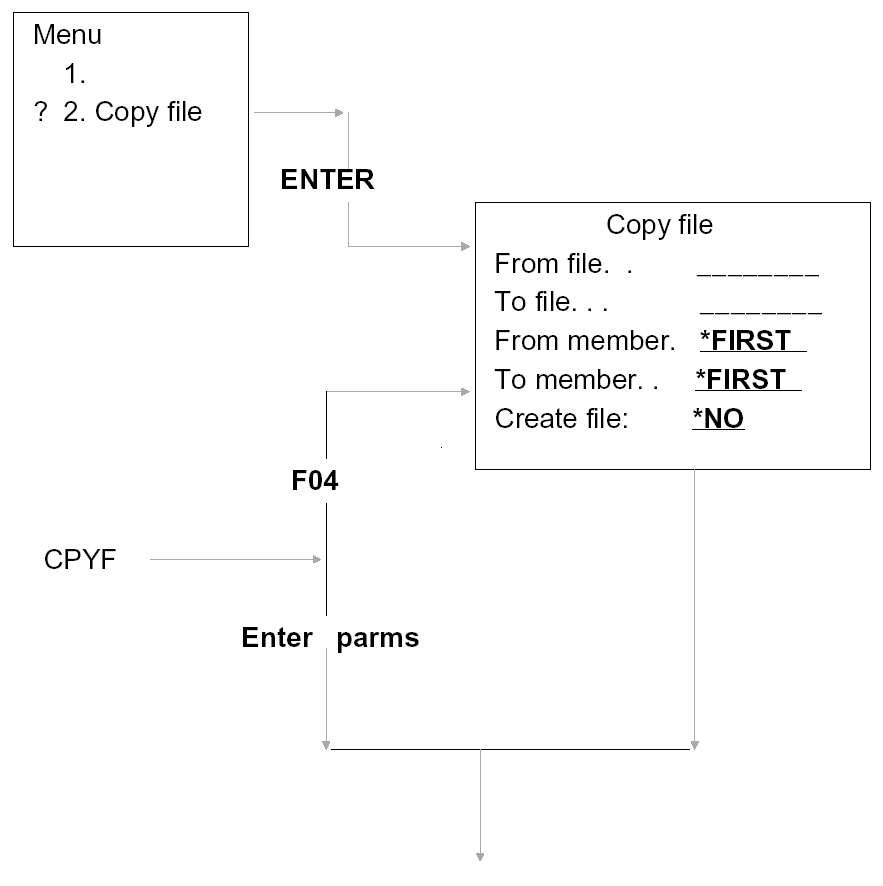
Layered interface should be intelligent—any choices made should guide what is subsequently shown on more detailed displays.
|
Copyright © 2014 CA.
All rights reserved.
|
|