Programming and Coding Examples › Parameter Descriptions
Parameter Descriptions
The following rules apply to the description of command parameters, which should appear below the diagram.
- The command parameters should be described individually in the same order as they are listed in the command diagram. The parameter keyword should be in bold type.
- Parameter descriptions should begin with a statement of the type of value expected, for example, ‘Qualified name’, ‘Generic qualified name’, ‘Message identifier’, ‘Text description’, or ‘Compound list made up of the following three elements’.
- Each special value should be described. The actual special value should be shown (for example, ‘*NONE’), followed by the text description.
- The default special value should be shown first, and underlined.
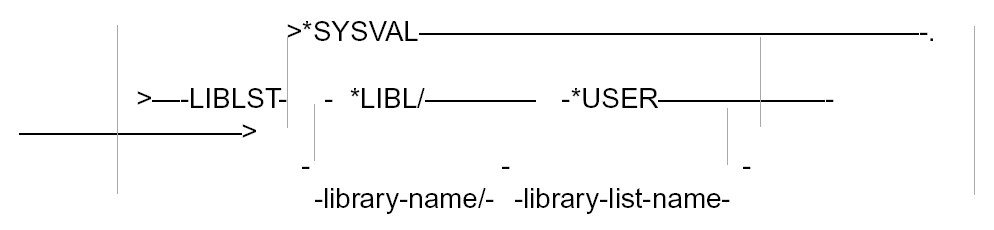
- For multi-part parameters which have a single value as well, show the single value on a separate branch line from that containing the multi-part parameter values (which may branch again to show a list of values):
The following rule applies to the notes on using the command:
- Notes should explain additional specific information that is required to use the command or understand its actions. Information pertaining to particular parameters should normally appear in the parameter description, not in the notes.
The following rule applies to the examples of using the command which should appear at the end:
- Examples should cite at least one instance of using the command. Give a typical example or examples.
YEDTLIBLST LIBLST(BORGES)

