

|
|
|
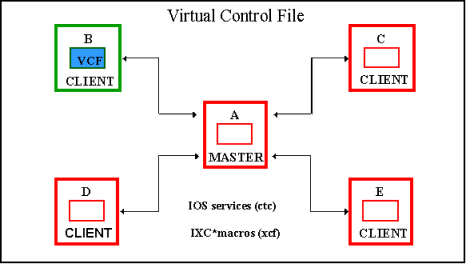
The second type of CA MIM control file is known as a virtual control file (VCF). A VCF resides in the data space of a selected CA MIM address space. The CA MIM address space that controls the VCF is known as the master CA MIM address space. The CA MIM master address space is charged with managing or serializing access to the VCF found in its data space. The other systems in the enterprise are knows as CA MIM client systems. Client systems request the VCF by sending requests to the CA MIM master address space. The CA MIM master queues and services these requests on a first in, first out basis. When a client request reaches the top of the queue, the CA MIM master will transfer the VCF from its data space to the CA MIM client address space using CA MIM-allocated CTC devices, or through the Cross System Coupling Facility (XCF) component of z/OS. The client CA MIM address space will then read and update the VCF and then transfer the updated copy back to the master. The master will then service the next VCF requestor, which may be another CA MIM client or the CA MIM master itself.
Serialization of the VCF is achieved by the VCF management code running in the master CA MIM address space. When the VCF is being transported using CA MIM-allocated CTC devices, I/O operations are performed using low-level IOS services.
If you chose the CA MIM XCF communication option, VCF I/O operations are performed using XCF IXC macros. When CA MIM presents the VCF to XCF for cross-system transport, XCF may use XCF-allocated CTC devices, or XCF-allocated coupling facility list structures to actually perform the cross-system transfer on the behalf of CA MIM. The transport vehicle employed by XCF is transparent to CA MIM as CA MIM is simply registered with XCF as an application. The following illustration shows these concepts:
| Copyright © 2011 CA. All rights reserved. | Tell Technical Publications how we can improve this information |