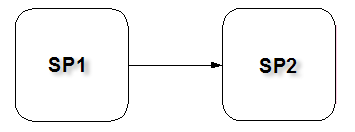
Pre-condition joins are where certain criteria is evaluated before the process flow is determined, and post-condition splits where the outcome of a process is used to determine the process flow. There are four types of splits:
A serial is a step that is enabled only when another step in the same process completes. For example:
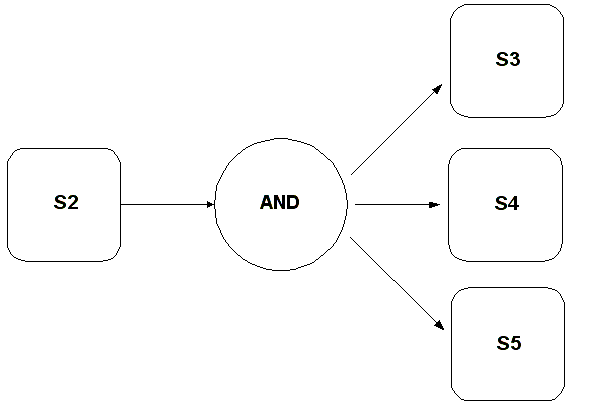
A parallel split is a point in the workflow where a single thread splits into several steps. The multiple steps can be executed in parallel and simultaneously. For example, a payment step may execute two steps: one that ships the order and another to inform the customer.
An exclusive choice (XOR-split) is a point in the workflow where one of several branches is executed, based on a decision or control data.
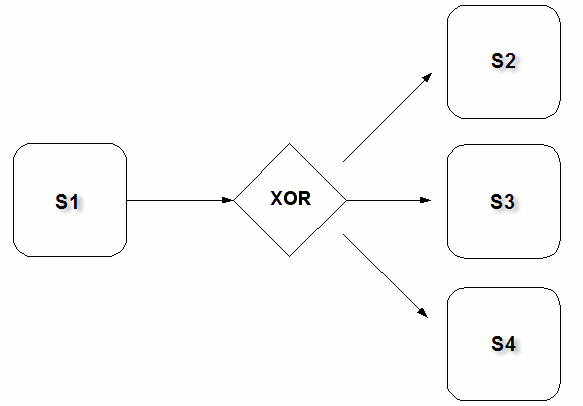
For example, a credit-card processing step may branch into one of the following two steps:
With exclusive choice splits, post conditions are evaluated in the order listed until a condition evaluates to true. The corresponding step is performed and all other remaining conditions and steps are ignored. Exclusive choice does not cause parallelism since only one branch is activated.
Multi-choice splits (OR-split) are a point in the workflow where, based on a decision or control data, a number of branches are chosen.
With this type of split more than one condition can evaluate to true. For example, after executing the evaluate damage activity, the contact fire department and contact insurance company activities can both be executed.
With a multi-choice split it is possible that both steps can be executed. All the post conditions are evaluated in the order listed. A thread of execution can be started for any condition that evaluates to true.
| Copyright © 2010 CA. All rights reserved. | Email CA Technologies about this topic |