

|
|
|
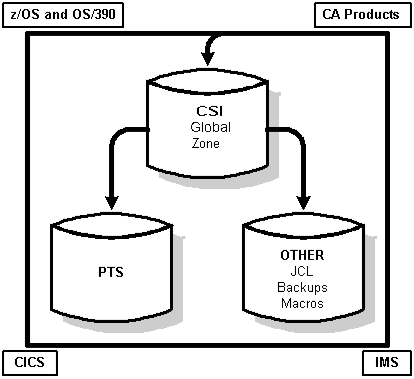
To install and coordinate software changes, SMP/E uses its own database, consisting of the following components:
SMP/E uses the CSI data sets as a directory to control the installation and maintenance process. The CSI maintains records of the structure and content of the operating system.
This data set serves as temporary storage of changes that are installed.
Examples include data sets that contain JCL, macros, time‑stamped records, and backup copies of changes.
Although data centers usually use a single SMP/E database to manage all of their software, it is possible to use separate databases for z/OS, telecommunications, and other applications. A single SMP/E database consists of one or more CSI (sharing only one global zone), PTS, and other work and utility data sets.
You can, however, separate products into more than one database.
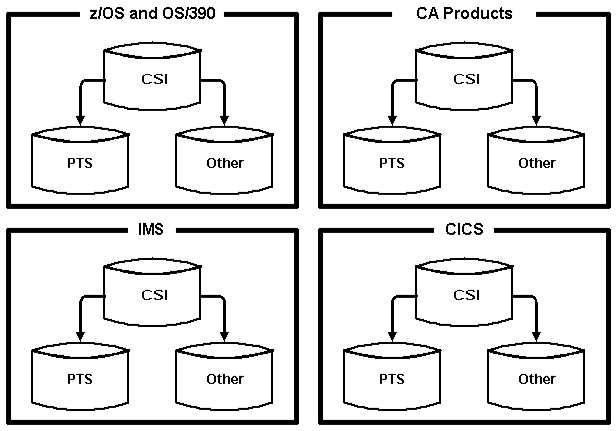
Because CSI data sets contain records defining the structure of the z/OS system, CA Auditor uses them to determine whether SMP/E processing was correctly performed. CA Auditor compares the actual changes it finds in system modules to the records of changes that SMP/E keeps. CA Auditor does not currently inspect the PTS and SCDS data sets.
| Copyright © 2009 CA. All rights reserved. | Tell Technical Publications how we can improve this information |