

|
|
|
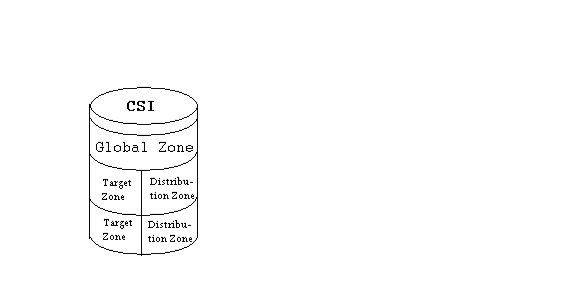
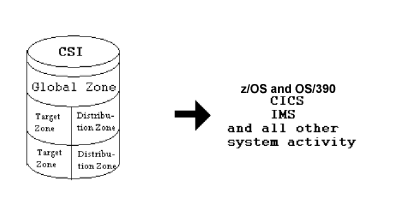
Besides multiple SMP/E databases, you can define your CSI as a single or multiple structure. A single CSI structure shares one CSI among multiple products and keeps track of all system activity for those products. It contains one global zone and one or more target or distribution zones. It lets you control your system from a single point. However, because SMP/E requires exclusive use of the entire CSI to process a zone, a single structure prevents you from running more than one background SMP/E job at a time.
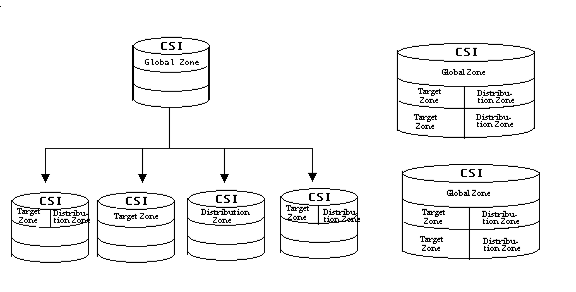
The multiple CSI structure defines unique CSIs for multiple products. When a multiple CSI structure exists, the CSIs share a single global zone. Typically, products such as z/OS, CICS, and IMS each have their own CSI. This structure lets you run more than one background SMP/E job at a time. You can also define a multiple structure to meet more of your site’s needs. Programming support, backup and update needs, security goals, and location of support teams can influence whether your site establishes a single or a multiple CSI structure.
Following is an illustration of a multiple CSI structure:
It is possible to construct a multiple SMP/E database that contains single and multiple CSI structures like the following one. Just remember that, if multiple CSIs are used, you must select each CSI that contains a global zone when you use CA Auditor to analyze SMP/E.
| Copyright © 2009 CA. All rights reserved. | Tell Technical Publications how we can improve this information |